What Should We Do?
The Question of Savior
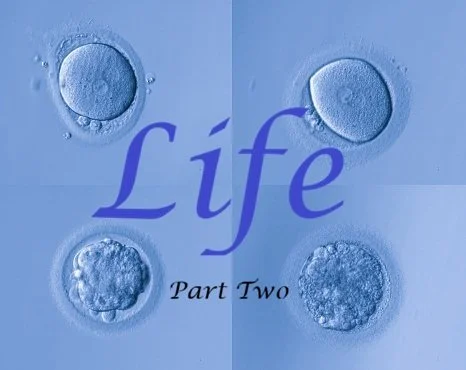
The problem of life is the inevitability of death, yet the answer to death is found in the simplest and most profound truth of the Gospel: “I am the resurrection and the life” (John 11:25). The divine simplicity of this truth is something to behold. Its depth is illimitable, and its breadth encompasses all of humanity.
Death is known as the great equalizer (cf. Ecclesiastes 3:19). The simplicity of life is this: All people will die, but the answer to why death exists is simple: “For as in Adam all die.” However, the means to life is stated just as simply: “so also in Christ all will be made alive” (1 Corinthians 15:22).
Paul succinctly states that all people are sinful and will, in fact, die. Yet the resurrection of Christ is the assurance of a future resurrection to righteousness and life for all “those who are Christ’s” (1 Corinthians 15:23). Issues arise when man injects his own thinking into this simple truth. The result is always confusion.
The application in the face of modernity is this: Men are conceived in sin (cf. Psalm 51:5). Sin then covers the entire lifespan of man’s earthly being. Regardless of a person’s stage of life, the inevitability of death hangs over them (cf. Romans 5:12). Therefore, from conception to their final breath, every living person is in need of the Savior.
It Is Finished
“Therefore, when Jesus had received the sour wine, He said, ‘It is finished!’” (John 19:30). Jesus' words must take us back to the promise of Genesis 3:15: “He shall bruise you on the head, and you shall bruise him on the heel.” The great put-down, long foretold, has come to pass. The fulfillment of the Law is complete. The enemy of God’s creation is vanquished. The glorious victory is now realized:
"Shall I ransom them from the power of Sheol?
Shall I redeem them from death?
O Death, where are your thorns?
O Sheol, where is your sting?
Compassion will be hidden from My sight" (Hosea 13:14).
The bruising of the serpent’s head was the death of death, brought about by the promised Seed. The future is secure.
"As a result of the anguish of His soul,
He will see it and be satisfied;
By His knowledge the Righteous One,
My Servant, will justify the many,
As He will bear their iniquities" (Isaiah 53:11).
Therefore, we "know for certain that God has made Him both Lord and Christ" (Acts 2:36). Jesus sits in triumph at the right hand God the Father, who reduced His enemy, by way of a head crushing blow, to a mere footstool (cf. Acts 2:35).
Jesus said, “It is finished,” and it indeed is! These three simple words, delivered from the cross, spoke of the comprehensive accomplishment of Jesus Christ – deliverance from sin and death, justification of the sinner, and the gift of life from the Savior who reigns with royal authority.
Today, in light of current technology, there is an urgent need to recover this simplicity.
None Lost
"For just as the Father raises the dead and gives them life, even so the Son also gives life to whom He wishes" (John 5:21).
Is there any point in human existence when an individual is more dependent and vulnerable than during the early days of life, even before birth? There was a reason Jesus took babies as well as young children into His arms to illustrate this truth. He then instructed: “Permit the children to come to Me, and do not hinder them, for the kingdom of God belongs to such as these. Truly I say to you, whoever does not receive the kingdom of God like a child will never enter it” (Luke 18:16–17).
In light of Jesus calling these children to Himself and using them as an example of those to whom the “kingdom of God belongs,” we may simply conclude that when Jesus “blessed them” (cf. Mark 10:16), His “words here suggest that God's mercy is graciously extended to infants so those who die are sovereignly regenerated and granted entrance into the kingdom – Not because they are deserving of heaven, but because God in His grace chooses to redeem them” (MacArthur Study Bible, Matthew). For further reading, see B. B. Warfield, The Development of the Doctrine of Infant Salvation.
"For just as the Father raises the dead and gives them life, even so the Son also gives life to whom He wishes" (John 5:21). From this text and that of Luke, we see that Jesus seeks, Jesus pardons, and Jesus determines who the "kingdom of God belongs to."
What are we to believe regarding those robbed of life before birth? Is there a difference between life aborted by their mother and embryonic life destroyed during IVF? Or what of the infant who lives for only a short time? Are we to think the murdered unborn will be counted among the wicked at the final judgment? The answer is found in this one simple, profound truth: “I am the resurrection and the life.” Christians, then, believe with a simple, childlike faith that those denied full temporal life will be raised to receive eternal life (The Westminster Confession of Faith, X.III; 1689 Baptist Confession of Faith, chapter 10.3).
I believe that the Lord Jesus, who said, “Of such is the kingdom of heaven,” doth daily and constantly receive into his loving arms those tender ones who are only shown, and then snatched away to heaven . . . we hold that all infants are elect of God and are therefore saved.
C. H. Spurgeon, Exposition of the Doctrines of Grace
When viewed in light of an absolutely sovereign God within His divine simplicity, it is not far-fetched to believe that God’s kingdom belongs to “such as these” – children whose lives were taken from them. They are assured of imputed righteousness and eternal life, and that such life is secure: “Now this is the will of Him who sent Me, that of all that He has given Me I lose nothing, but raise it up on the last day” (John 6:39).
Christians must believe that, with the death of every unborn child, “He [Jesus] will WIPE AWAY EVERY TEAR FROM THEIR EYES; and there will no longer be any death; there will no longer be any mourning, or crying, or pain” (Revelation 21:4) – and that our God will do this in order “to make known the riches of His glory” (Romans 9:23), “to the praise of the glory of His grace, which He graciously bestowed on us in the Beloved” (Ephesians 1:6).
Death To Life
What, then, is the answer to the great problem of life? “For I delivered to you as of first importance what I also received, that Christ died for our sins according to the Scriptures, and that He was buried, and that He was raised on the third day according to the Scriptures” (1 Corinthians 15:3–4). We read in Scripture that Jesus is the answer: He became flesh and blood and, through His sinless death and resurrection, rendered death powerless. He became our merciful and faithful high priest, who justly makes propitiation for people’s sins (cf. Hebrews 2:14–18).
This is the answer to the great problem of life.
The last words Jesus spoke from the cross expressed a volume of truth like none other. He fully and perfectly satisfied the justice demanded by the Law of God. His innocence was proven in His death and resurrection. By His innocence, He wielded the fatal blow against the power of death. He opened the ever-flowing cascade of sovereign grace, bringing forgiveness of sin and passage from death to life to whomever He chooses.
Pro-life Christians must conclude that all children murdered before birth are not lost. This should lead them not to attempt, in the weakness of their flesh and through methods and means contrary to God’s prescriptive covenantal order, to take authority upon themselves to do what only Jesus Christ can do – that is, save life. Pro-life Christians must believe in the sovereign grace of God who will be glorified even in the death of the preborn. Why? Because "the gracious gift is not like the transgression. For if by the transgression of the one the many died, much more did the grace of God and the gift by the grace of the one Man, Jesus Christ, abound to the many" (Romans 5:15). Jesus saves!
What Are We To Do?
In our day, such a question comes with pragmatic assumptions – and this has led Christians into sin. When if fact the Word of God, the Gospel, is more than sufficient to change the hearts and minds of those who practice and participate in IVF. And yet, pro-life Christians do not believe God will care for those lives threaten as a result of IVF without their help. This is blatant pragmatism.
The evidence of this is a distrust in the sovereign God, a violation of the sanctity of marriage and its binding covenant, and a failure to understand the sanctity of life through their participation in the very sin of IVF itself.
"Noah, a preacher of righteousness" had no means in and of himself to curb the evil around him nor to save people nor babies (2 Peter 2:5). Genesis 6:8 states, He "found favor in the eyes of Yahweh," because he trusted his God and, by faith, was obedient to the Word in his preaching and actions. His life and spoken testimony were a witness condemning the depraved culture in which he lived (cf. Hebrews 11:7).
What we do not read is Noah running and grabbing a couple of helpless babies and dashing into the ark just as the door was to be closed in an attempt to save at least one or two lives from among the countless. No. His faith led him to righteousness. He held to his faith, knowing that many little ones still in the womb and many more sleeping in their cradles, dependent and helpless, would all soon die because of the evil of others. He did not take matters into his own hands. He did not seek some self-affirming justification in order to disobey God's Word. He trusted the deaths of all those little children to his holy God.
Luke 17:26–27 describes our day: "just as it was in the days of Noah." Judgment and destruction loom large. "Noah was a righteous man" (Genesis 6:9). Like him, we are to preach righteousness by faith, with all humility and trust, warning people that their secret crimes will be punished and that the vindication of the innocent they murdered or about to, will indeed come.
Preaching righteousness is to preach Jesus, the only means of salvation. In so doing, we become like Noah, heirs of righteousness according to faith (cf. Hebrews 11:7). And, such righteousness leaves everything else to Yahweh God who commands life and death.
That is what we are to do!
What Are We Doing?
Pro-life Christians are acting impertinently by meddling with life and the Law of God, taking unto themselves matters of life and death. At the moment of Jesus' betrayal and arrest, the apostle Peter, with zeal, decided the situation called for him to intermeddle, to impetuously interfere as if circumstances had spiraled out of control – "he must do something!" He did not realize that his actions exposed his own weakness. Jesus' rebuke to Peter was swift and clear (cf. Matthew 26:51-54).
The danger is that pro-life Christians believe they have the license to act without considering the consequences of their actions.
This storm of evil is real, but it is not sovereign. Jesus is not anxiously pacing to and fro in heaven because of the evil of IVF and the plight of the unborn. He is the Savior, and the character of His rule is best seen at the cross. "What appeared to be chaos and the triumph of evil was, in truth, 'delivered over by the predetermined plan and foreknowledge of God' (Acts 2:23). The darkest hour in history unfolded under His wise and holy hand for the salvation of His people" (HeartCry Magazine, Fall 2026).
There was no darker hour or greater evil in human history, before or since. Jesus Christ reigned then, and He reigns today as sovereign King. He and He alone is able to make intercession for and care for the unborn. In the desire to rescue a life, Christians are taking upon themselves a burden that only Jesus can carry.
I Am … The Resurrection and The Life
Jesus, in true simplicity, said, "I am the resurrection and the life." It is just that simple and profound. This is the call to all of humanity, even to those who will never take their first breath. Death is the door the elect must walk through, where life awaits all of God's children who were chosen before the foundation of the world.
This is the gift of hope. In Jesus, and in Him alone, are we given hope.
Pastor Edward Mote of Sussex, England 1834, wrote:
My hope is built on nothing less
than Jesus' blood and righteousness;
I dare not trust the sweetest frame,
but wholly lean on Jesus' name.
Jesus is the "Author of life" (Acts 3:15). Here is the simple truth of hope that needs to be applied to all life that will one day die. We are to hope in nothing less.
"For we do not preach ourselves but Jesus Christ as Lord."
2 Corinthians 4:5